


Phytopathology applied to organic agriculture
PLANT PATHOLOGY APPLIED TO ORGANIC AGRICULTURE
AN ENCOURAGING VISIT FOR THE FUTURE
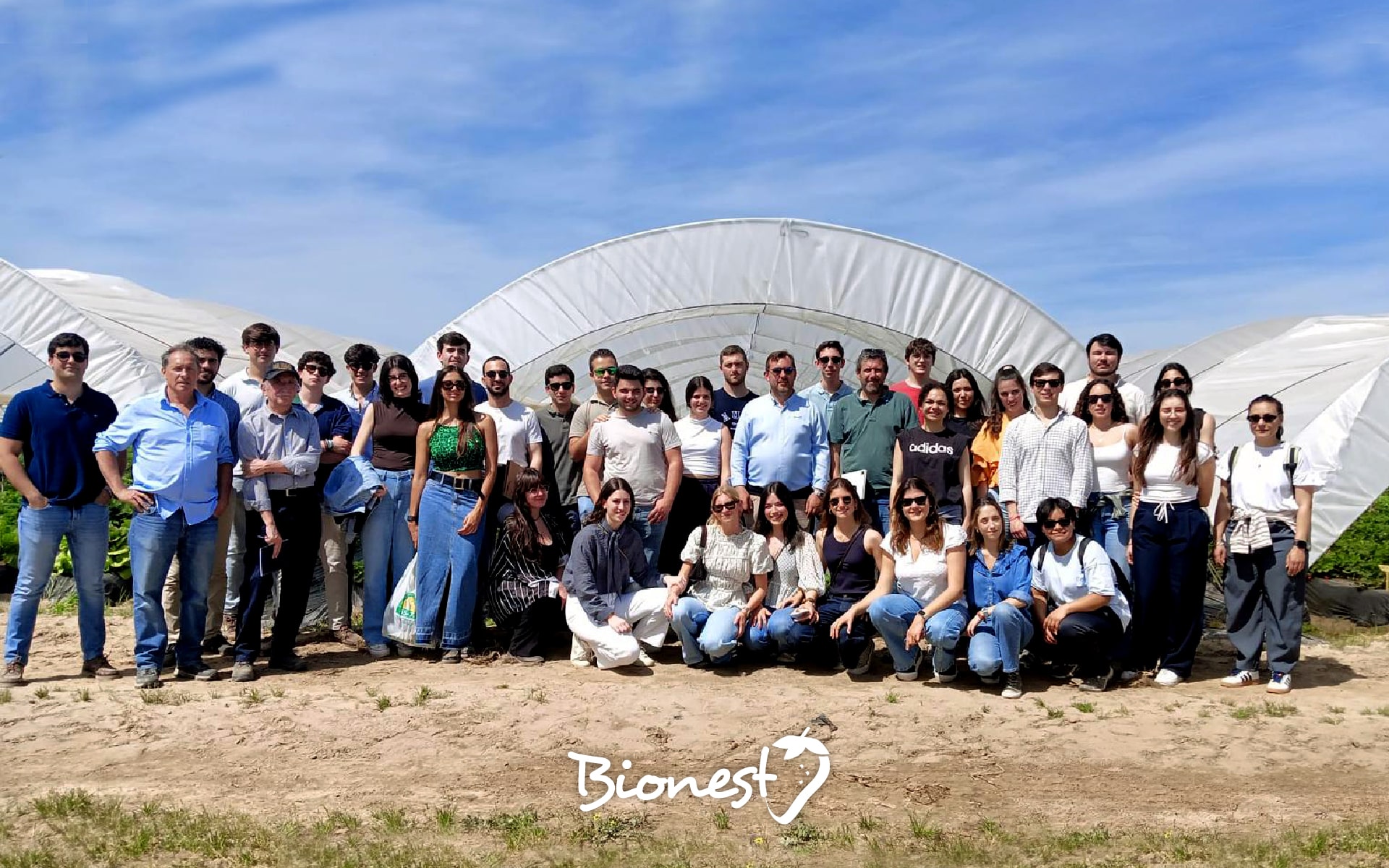
Today we welcomed students from the Master’s Degree in Plant Pathology at the University of Córdoba to show them our organic strawberry crop, its particularities, unique characteristics, and to allow them to observe firsthand the field study on irrigation reduction. In this way, they can clearly perceive the effect that irrigation reduction has on pests.
For the students, it was an opportunity to experience a commercial-scale cultivation field, observe diseases, fungi, and insects within a real commercial production environment, outside of a laboratory setting, and move from theory into practice.
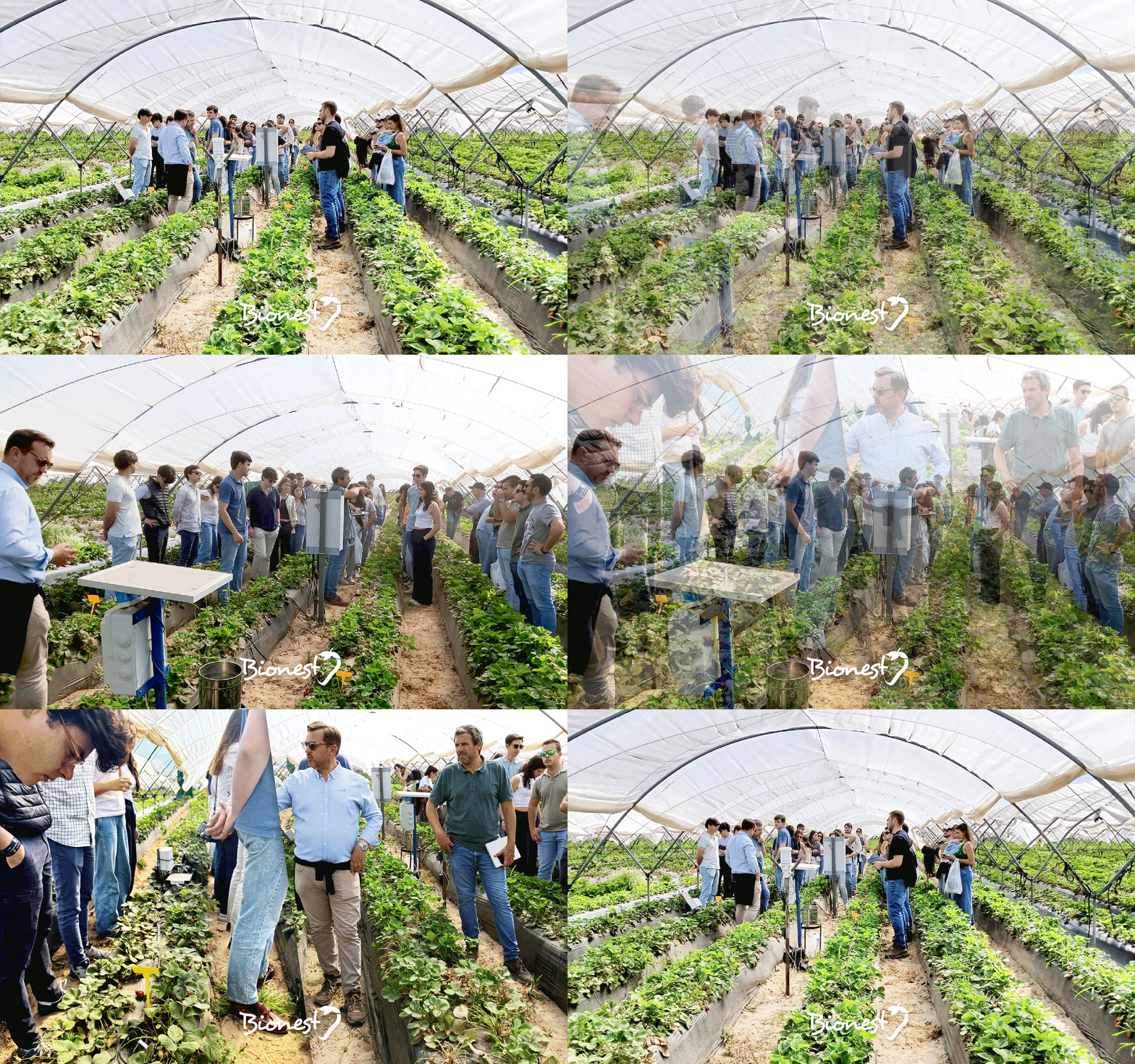
In addition, our organic cultivation model involves coexisting with pests. They are controlled and limited, but not eradicated, creating the ideal environment for students to learn how to identify them within a real commercial production setting.
Likewise, direct contact with the professional side of the sector is an invaluable learning experience. They represent the future of our industry, and it allows them to discover what may become their future professional environment.
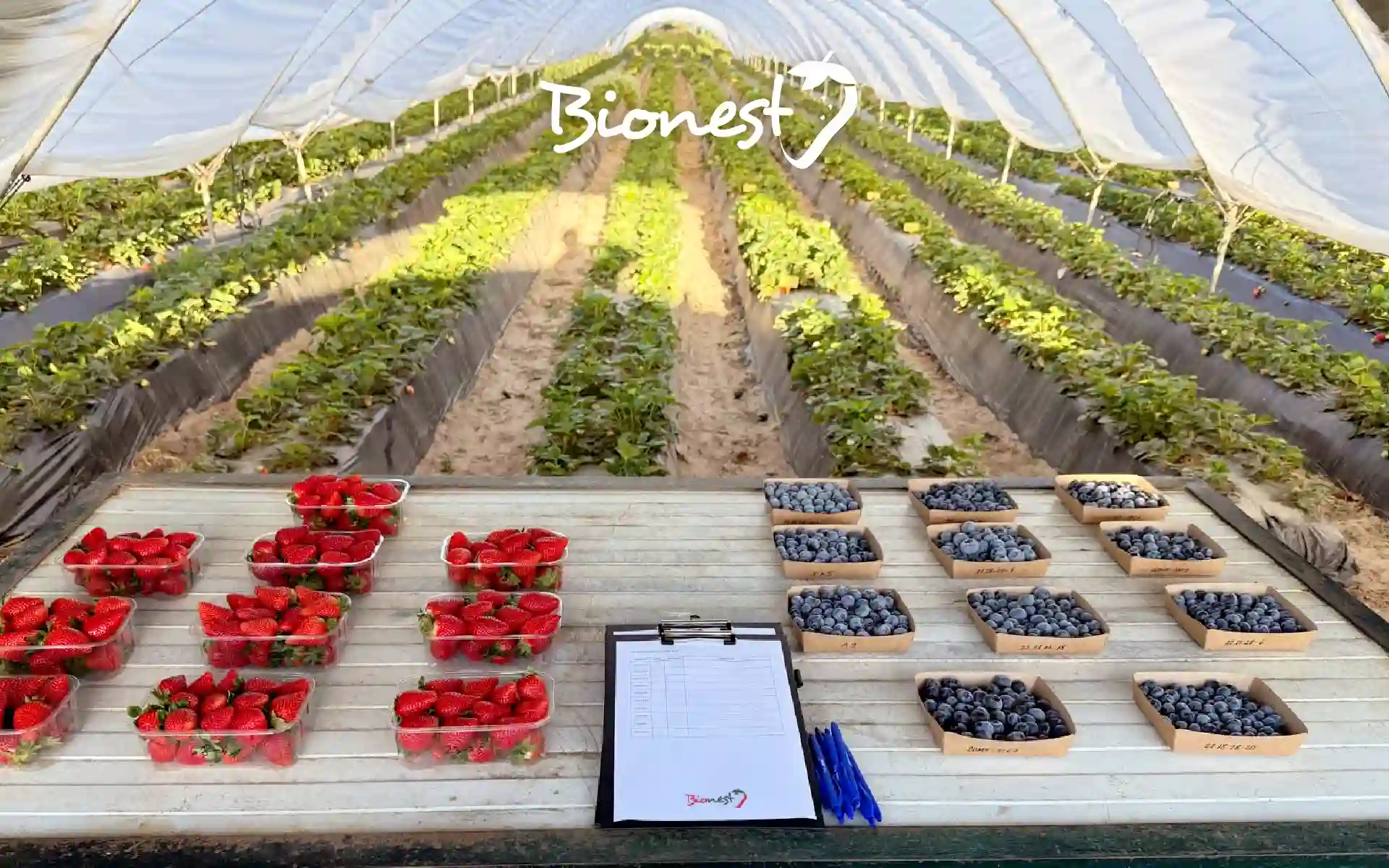
We also took the opportunity to show them our varietal trial fields, where the best specimens are subjected to reduced irrigation in order to determine which varieties adapt most effectively.
The students are able to gain a brief understanding of the evaluation criteria used for a new variety, as well as the need to test new varieties under organic cultivation conditions, with a clear emphasis on disease resistance and adaptation to our highly distinctive organic growing methods compared to conventional agriculture.
THE REAL BENEFITS OF PHYTOPATHOLOGY
Essentially, drawing a parallel with human health, a healthy diet and strengthening the immune system will always be preferable to relying on chemical treatments and pills.
OFFICIAL COLLABORATOR IN THE TRIALS
University of Huelva is our main collaborator in conducting and studying the irrigation reduction trials in strawberry cultivation, including the benefits and drawbacks for crop performance, fruit quality, and disease development. These trials are carried out at the La Rábida campus of the University of Huelva under “laboratory” conditions.
Plant Pathology applied to organic agriculture is the discipline that studies the diagnosis, prevention, and sustainable management of plant diseases, prioritizing natural and environmentally respectful methods. Its objective is to maintain healthy crops, reduce agricultural losses, and preserve the biological balance of the ecosystem.
KEY ASPECTS OF PHYTOPATHOLOGY
IN ORGANIC AGRICULTURE:
- Preventive diagnosis:
Early identification of symptoms and imbalances in plants, such as spotting, necrosis, wilting, or weakening, allowing action to be taken before the disease spreads.
- Causal agents:
Study of the main pathogens affecting organic crops, such as fungi, bacteria, viruses, nematodes, and viroids, analysing their behaviour within sustainable agricultural systems.
- Abiotic factors and crop balance:
Organic agriculture places special attention on environmental factors that influence plant health: soil quality, excess or deficit of water, balanced nutrition, biodiversity, temperature, and climatic stress.
- Biological control and natural prevention:
Development of ecological strategies to protect crops through the natural strengthening of plants, the use of beneficial microorganisms, soil management, crop rotations, functional biodiversity, and preventive techniques that reduce the need for external treatments.
- Sustainability and healthy production:
Organic phytopathology seeks to understand the relationship between the pathogen, the host plant, and the environment, promoting more resilient and sustainable agricultural systems aligned with healthy and environmentally responsible food production.
BIONEST AND THE FUTURE OF PHYTOPATHOLOGY
IN THE ORGANIC SECTOR
At Bionest, in-depth knowledge of phytopathology applied to organic cultivation is essential for the successful development of the demanding strawberry, raspberry, blueberry, and blackberry varieties we grow in our fields.

Tomás Cera, Commercial Director of Bionest
For more information about the latest developments and results of our organic berry varieties, please contact us. We will be pleased to keep you updated.


